Popular Courses by Semester
Weekly courses we offer to support your high schooler’s curriculum.
AP World History
AP US History
AP Calculus AB & BC
Precalculus
Algebra 2 and Trigonometry
AP Biology
AP Chemistry
AP Physics
AP English Language
AP English Literature

FALL 2026 COURSES
-
![]()
SAT Verbal: Grammar/Composition - Christy Frantz
MONDAYS | 5:30-6:30pm
Ideal for August 22 exam takers, October exam, and PSAT October.
7 meetings: 8/17, 8/24, 8/31, 9/7, 9/14, 9/21 9/28
As students work with the SAT/ACT grammar portion they begin to readily recognize and correct the 16 structures. Students receive a ready-fix grammatical guide with isolated exercises and will see their confidence and accuracy with material increase immediately, not to mention their improvement in editing their own writing and using more sophisticated structures. Reading: For many, the reading section is often the most difficult area and the passages require different approaches depending on the genre. This class teaches how to more actively track and infer. For those students preparing for PSAT or for those who have already taken an ACT/SAT and aim to further improve, this is meant for you!
-
![]()
Algebra 2 - Dale DeBakcsy
TUES 4-5pm or SAT 11-12pm | weekly
The geometry year is wonderful — and quietly destructive to the algebra skills students spent years building. The rules for handling fractions within fractions, when to cancel and when to distribute, learned back in Algebra 1, tend to fade during the geometric interval and need some sprucing up before heading into a second algebraic year. This course does exactly that, getting algebra skills back up to scratch while preparing students for their first month by diving into polynomial and function theory and how to manage the sometimes intimidating detail those subjects involve. Students will also receive a party pack of animated notes, annotated problem sets, and more.
The series concludes with two assignments tied directly to start-of-school work. Students will also meet individually with Dale for a private session before or after the school year begins.
Course materials included.
-
![]()
AP English Literature - Christy Frantz
TUESDAYS | 4-5pm OR 5-6pm
You may have enjoyed AP English Language and sharpened your skills as an arguer and analyst — now it is time to trade the op-ed for the poem, the speech for the novel, and discover what language does when it stops making points and starts making art. We will dive headfirst into the art of reading closely, writing boldly, and finding the voice that will carry you through one of the most rewarding courses in your high school career. Poetry, prose, and drama await — and with them, the tools to unlock what writers are really doing beneath the surface of the words on the page.
The great challenge of AP English Literature is not simply understanding what you read, but learning to argue about it with confidence and style. We will work on developing that voice — the one that knows how to build a thesis with conviction, support it with textual evidence, and carry a reader from first line to last with purpose and authority. Through close reading of poems and prose passages, students will practice the particular writing moves that AP graders reward, and discover that literary analysis can be as thrilling as the works it examines.
The series concludes with two writing assignments tied directly to the work students will face at the start of school. Students will also meet individually with Donna for a private writing session before or after the school year begins.
Course texts and sample AP prompts and essays included.
-
![]()
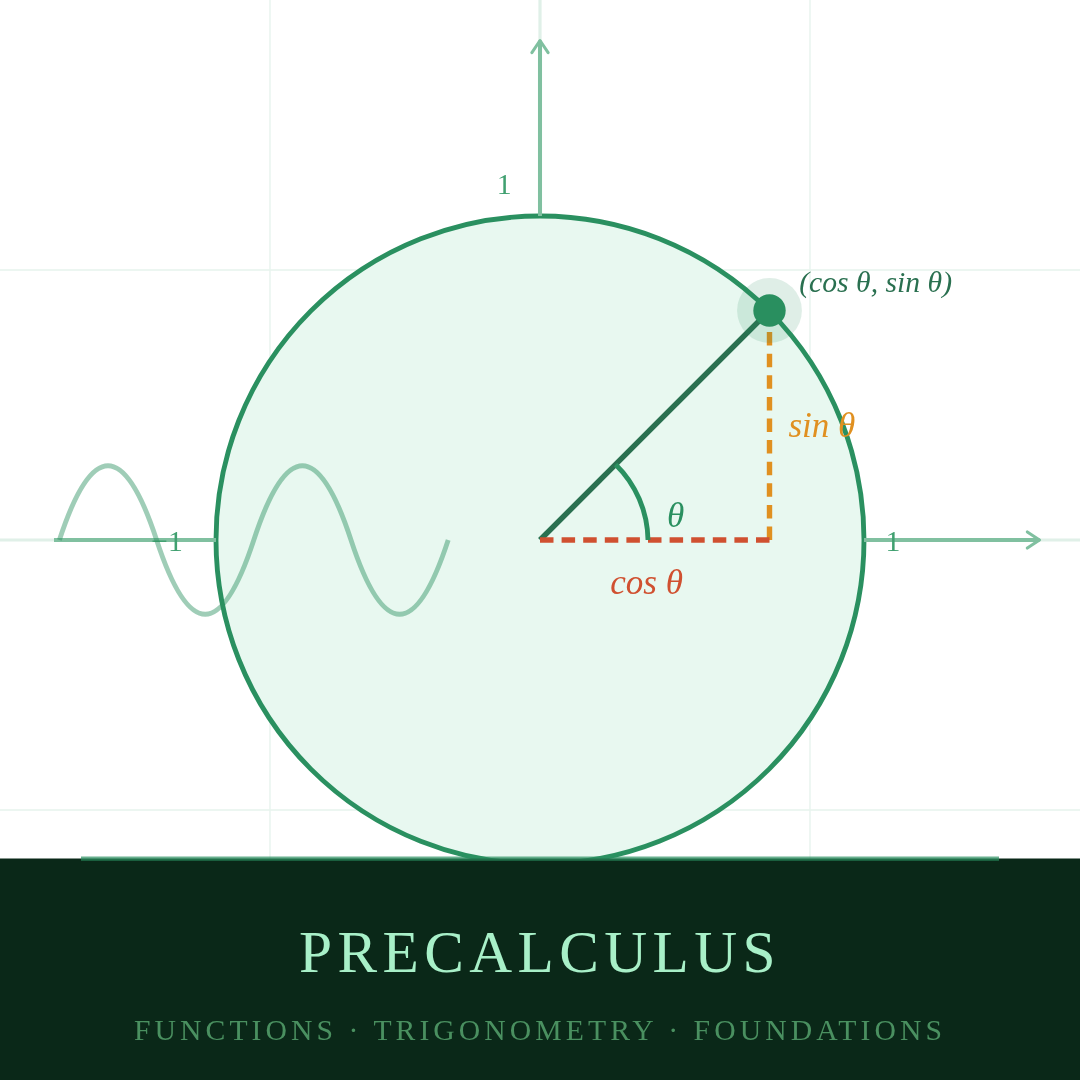
Precalculus - Dale Bakcsy
TUESDAYS | 6-7pm
No course in high school mathematics has a bigger gap between its name and its contents than Precalculus. Stuffed with dozens of topics that bear little relation to one another and only occasionally to calculus itself, it requires a solid organizational plan for handling that diversity, and a head start so the opening salvo of Function Theory doesn't catch students by surprise. We'll work through the opening topics, explore how calculator literacy can make the course far more manageable, and tackle the larger topics students traditionally find most challenging, so that on Day One every student is ready to do mathematical battle.The series concludes with two assignments tied directly to start-of-school work and review exercises to increase confidence. Students will also meet individually with Dale for a private session to sharpen their skills before or after the school year begins.
Course text and sample problems included.
-
![]()
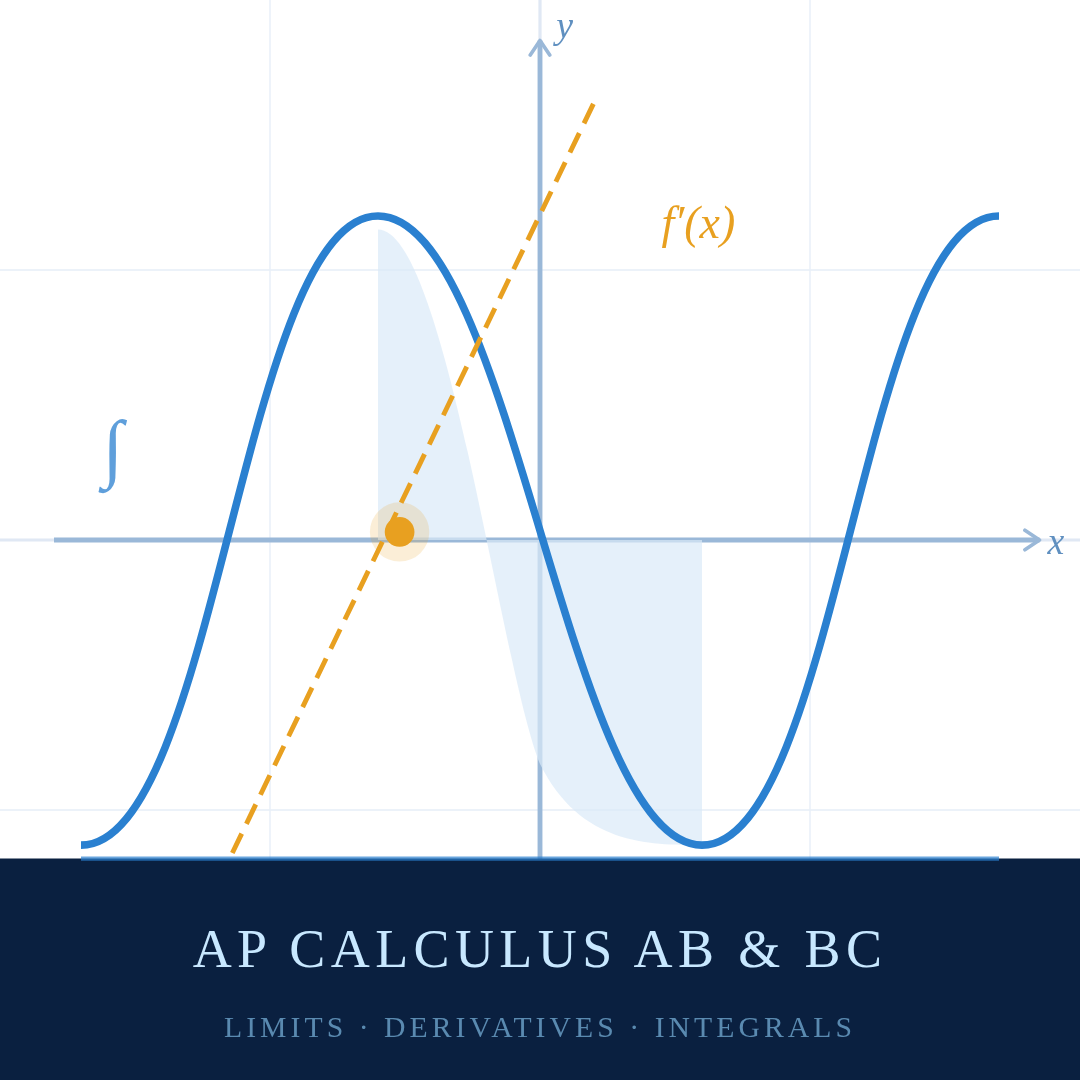
AP Calculus BC - Dale Bakcsy
TUESDAYS | 8-9pm
Calculus has a reputation, and not always a fair one. Much of what stops students cold in the first weeks is not calculus at all — it is algebra they once knew and have not had reason to use. We will reacquaint students with those skills, then master the tricky concept of evaluating limits, which occupies the first weeks of the regular course, giving students a running start before turning to the concept of the derivative and ways to simplify its trickier aspects. Focus will be on calculator literacy, problem type recognition, and emergency methods to employ when All Else Fails.The series concludes with two assignments tied directly to start-of-school work. Students will also meet individually with Dale for a private one-on-one follow-up session.
Course text and sample AP prompts included.
-
![]()
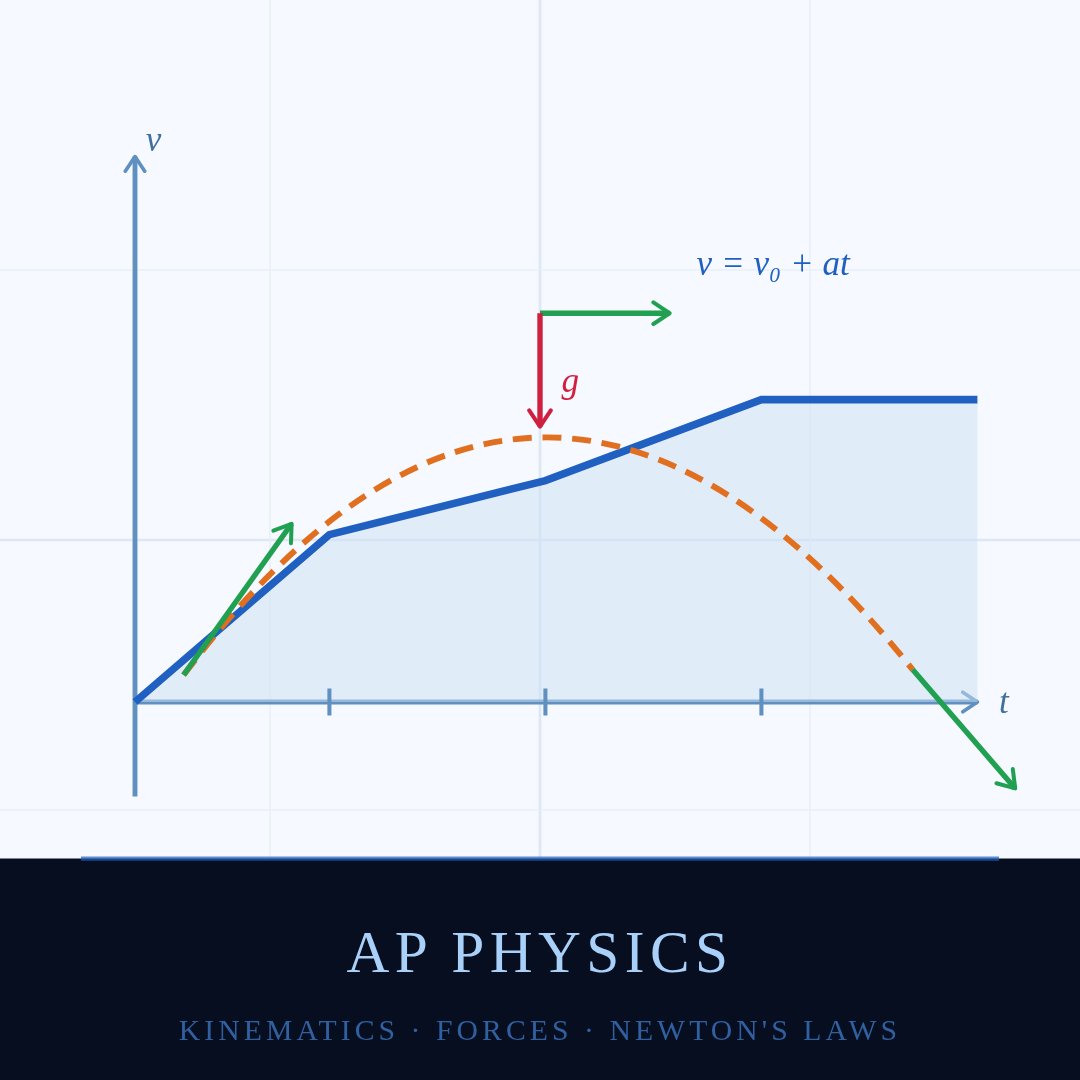
AP Physics - Dale DeBakcsy
WEDNESDAYS | 4-5pm
Physics begins with motion graphs and kinematics which, while perfectly clear to a student who has had AP Calculus, can be quite intimidating to those coming from Precalculus or Algebra 2. We will start the year with a series of sessions that ease students into these crucial concepts so they can hit AP Physics with the confidence to carry them through the first, often difficult, month.
We will focus on calculator literacy, position, velocity, and acceleration graphs, kinematic equations and their applications, and get a solid start on Newton's Laws of Motion.
The series concludes with two assignments tied directly to the work students will face at the start of school. Students will also meet individually with Dale for a private session to sharpen their skills before the course begins.
Students have the option to continue weekly AP Physics meetings fall and spring semesters.
Course text and sample AP prompts included.
-
![]()
AP English Language - Christy Frantz
WEDNESDAYS | 5-6pm OR 7-8pm
Even if you are not planning on taking AP English Language next year, this course is a fantastic way to improve your confidence and skill in close reading, thinking, and writing. Some public high schools allow students to sit for the May exam without taking the course at school, and many students do exceptionally well with an introductory summer approach and several follow-up sessions spaced throughout the year.
AP English Language is the most useful college preparatory class around, offering short nonfiction pieces, speeches, humorous articles from The Onion, perspectives from TED Talk thinkers, heads of state, artists, and inventors. The ideas are a blast. Students will gain a comprehensive understanding of the synthesis, rhetorical, and free response essays through engaging samples, discussions, and templates that make the whole course year so much easier. Instructors ask just the right questions to bring out the best in every student.
The series concludes with two writing assignments tied directly to the work students will face at the start of school. Students will also meet individually with Christy for a private writing session on their own synthesis and rhetorical essays before or after the school year begins.
Course text and sample AP prompts and essays included.
-
![]()
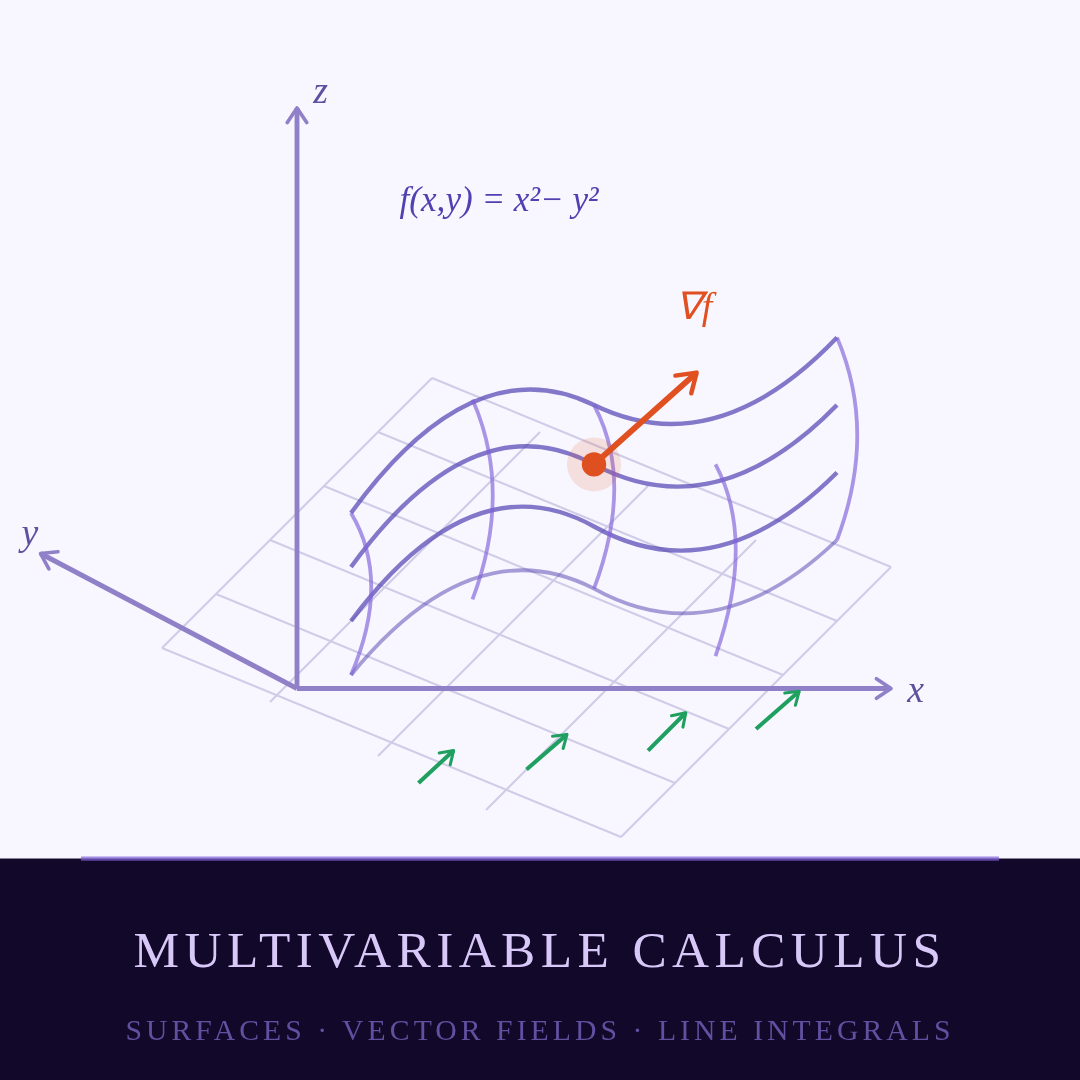
Multivariable Calculus
WEDNESDAYS | 5-6pm
It is time to move into the third dimension! In multivariable calculus we’ll be looking at three dimensional surfaces and the objects that walk along them, as well as topics in vector fields that lie at the heart of our modern conception of how the universe works. Unlike in regular calculus, where generally there is one path forward per problem type that you’re taught, in MultiVar a given problem could have several potential ways of handling it, and the job of this course will be to teach you how to recognize which methods are most efficient for which situations. We’ll be covering the basics of Line integrals, Surface Integrals, and Vector Calculus and more to accompany your college class through the semester together.Course text and sample AP prompts and essays included.
-
![]()
AP Chemistry - Dale Bakcsy
WEDNESDAYS | 7-8pm
One of the major difficulties AP Chemistry students face is mastering areas not directly dependent on mathematical algorithms. Students who might be brilliant at calculating equilibrium constants or buffer pH values can get caught flat footed when it comes to explaining how different reactions ought to happen, or why a particular concept makes sense from a theoretical or physical point of view.Our sessions will look at the main computation topics of the first month of AP Chemistry and the calculator literacy that can make that time go more smoothly, but the real focus will be on how to explain chemistry concepts in words, and particularly reaction types. When the massive theoretical and reaction sections hit, students will not be madly scrambling to cover a mass of seemingly unconnected material. They will have the most important concepts at hand to guide and anchor their explanations.
The series concludes with two assignments tied directly to the work students will face at the start of school. Students will also meet individually with Dale for a private session to sharpen their skills before the course begins.
Students have the option to continue weekly AP Chemistry meetings fall and spring semesters.
Course text and sample AP prompts and essays included.
-
![]()
SAT Math Weekly - Dale Bakcsy
SATURDAYS | 9:30-10:30am
Ideal for August 22 exam takers, October exam, and PSAT October.
7 meetings: 8/8, 8/15, 8/29, 9/5, 9/12, 9/19 9/26
The SAT has changed a great deal over the last few years, and nowhere more markedly than the math section. While some schools' focus on common core type curriculum has made the test easier for some students, others from a more traditional math background find its manner of asking questions bewildering. This course aims to reduce the often baroque wording of the SAT to its simple underlying concepts, allowing students to recognize basic problem types and arm themselves with first steps for each of those types so that they won't be caught without an idea for What To Do First. We shall explore the great mantras of the New SAT, and learn the deep secrets hidden within an ordinary TI-84 calculator that can help on the SAT (and SUPER help on the ACT!). Come for the quadratic shortcuts, stay for the polynomial long division!
-
![]()
AP World History - Dale Bakcsy
SATURDAYS | 2-3pm
History moves in waves, and AP World History asks you to surf all of them at once. We will tackle the opening chapters with added storytelling and dramatics, address those first assignments with more depth, develop persuasive written pieces you'll apply in those first weeks, and draw on real AP test questions and scored student responses for modeling and exposure to academic writing.800 years, 6 continents. AP World is a course of staggering breadth that also introduces students to the craft of history writing, document analysis, and thesis formation. It is where you learn to argue about the massive forces underlying world events and piece together the continuities linking us to events a half world and multiple centuries away.
The two great challenges are digesting an enormous amount of material efficiently and writing a compelling historical essay under time pressure. This course gives students the writing practice they need to avoid first quarter essay grade shock, while covering the first three weeks of content and showing ways to tame the mass of detail. We'll focus on the 11th through 13th centuries, the bedrock of AP World where the ideas of Empire, Trade, and Religion that echo throughout the course had much of their modern origins.
The series concludes with two writing assignments applicable to the ones students will face in the fall. Students will also meet individually with Dale for a private Document Based Question to sharpen their analysis of primary document readings and essay introductions before the course begins.
Course text and sample AP prompts and essays provided.
-
![]()
AP US History - Dale DeBakcsy
SATURDAYS | 3:30-4:30pm
You have survived AP World. You know how to build a thesis, contextualize an argument, and write under pressure. AP US History will ask all of that of you again, but this time the detail is relentless, the timeline is compressed, and the material is closer to home, which means the expectations are higher.This course takes a deeper dive into the pre-colonial and colonial history that is so often rushed in standard US History classes racing to reach the 1990s by early April. We will slow down where it matters: early Native American societies, their complex interactions with Europeans, the colonial economy, and how geography and trade shaped the wildly different political cultures that would eventually collide on the road to revolution. Understanding this foundation is what separates the student who merely knows the story from the one who can argue about it.
The writing challenge in AP US is not starting from scratch. It is managing the avalanche. There is simply too much to memorize, too many dates, acts, movements, and figures competing for space. We will work on strategies for organizing that detail and deploying it efficiently in essays, so that students walk into the first week of school with a framework that makes the flood manageable and a writing toolkit sharp enough to handle whatever the exam throws at them.
The series concludes with two writing assignments tied directly to the assignments students will face at the start of school. Students will also meet individually with Dale for a private writing session to sharpen their skills before the course begins.
Course text and sample AP prompts and essays included.
-
![]()
AP Biology - Christopher Yu
SUNDAYS | 3-4pm
Of all the AP science classes, AP Bio is the most notorious for never finishing its curriculum content by the end of the year, forcing students to regularly cover 4 to 8 chapters of material on their own in the weeks before the AP Exam. This course intends to relieve that anxiety by giving students exposure to those topics throughout the school year, so that when May rolls around they will have a nice set of study notes waiting for them! Topics covered include ecology, biochemistry, biotechnology, and cell differentiation.Course text and sample AP prompts and essays included.
Contact us
Interested in working together? Fill out some info and we will be in touch shortly. We can’t wait to hear from you!